|
Introduction
Tuberculosis
(TB) is a contagious disease that has been around
for a century and has caused significant public
health concerns, mortality, and financial burdens
over the past two decades. Mycobacterium
tuberculosis infection results in active
tuberculosis cases, with transmission occurring
via coughs and sneezes.(1) However, TB prevalence
has increased over the subsequent years, reaching
10.7 million active cases globally, with Southeast
Asia accounting for the largest share of the
global disease burden (34.00%). According to the
Global TB Report (2025), the disease burden in
developing countries such as India has worsened
over the last two decades, accounting for 25.00%
of global TB prevalence.(2) Based on the site of
infection, TB is broadly classified into pulmonary
TB (PTB), which primarily affects the lungs, and
extrapulmonary TB (ETB), which involves organs
other than the lungs, such as the lymph nodes,
pleura, bones and joints, genitourinary tract,
brain, pericardium, larynx, and abdomen.(3,4) The
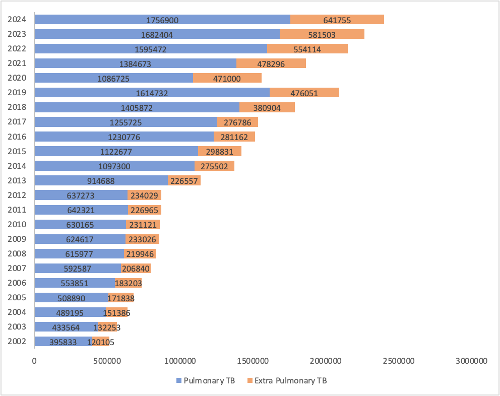
overall prevalence of TB from 2002 to 2024 showed
that PTB cases in India increased from
approximately 0.40 million to 1.76 million,
representing a nearly 3.4-fold rise, and while
EPTB cases increased more dramatically, from about
0.12 million to 0.64 million, corresponding to a
4.3-fold increase. During the COVID-19
period,(5–9) there was a significant decrease in
reported TB cases, with PTB decreasing by
about15.00–20.00% and EPTB by about 10.00–15.00%
(Figure 1), which could be attributed to
disruptions in healthcare services and delays in
diagnosis.(10,11) India has witnessed a 21.00%
reduction in TB cases between 2015 and 2024,
decreasing from 237 per lakh to 187. This figure
nearly doubles the global average decline of
12.00%, demonstrating that India is making
significant progress towards achieving the
Sustainable Development Goal (SDG 3) of
eradicating the TB epidemic by 2030.(12)
The major
comorbidities associated with TB are
undernutrition, diabetes mellitus, smoking,
alcohol use disorders, and HIV.(3,13,14)
Undernutrition is a condition caused by inadequate
food intake or poor nutrient absorption, which is
required to meet the daily physiological
requirements fora better health condition. It is
considered to be the major risk factor, accounting
for more than 40.00 to 50.00% of all TB cases each
year in India.(13,15,16) Despite having relatively
improved healthcare infrastructure and facilities,
promising economic growth, food security, and
strong policies, India still accounts for nearly
one-quarter of the global undernourished
population.(12,14) A recent nation-wide survey
found that 18.70% of women and 16.20% of men
suffer from chronic energy deficiency (BMI<18.5
kg/m²).(17) The prevalence of undernutrition was
found to be more serious for pregnant women and
children.(18) Similarly, 7.70% of children under 5
years reported severe acute malnutrition, while
the prevalence of wasting exceeded 20.00% in
several Indian states, including Bihar and
Gujarat.(17) Insufficient energy intake and
deficiencies in essential micronutrients such as
iron, zinc, selenium, vitamin A, and vitamin D
impair immunological function and increase the
susceptibility to M. tuberculosis infections.(14,19)
The relationship between undernutrition and TB is
distinctly bidirectional, with undernutrition
compromising host immune defences and facilitating
progression from latent to active TB, and active
TB further exacerbating undernutrition through
increased metabolic demands, appetite suppression,
muscle wasting, and micronutrient
depletion.(15,16,20,21) This two-way interaction
creates a never-ending cycle, with disease and
nutritional deficiencies reinforcing each other,
resulting in the "double burden" of TB and
undernutrition.(20,21)
|
| Figure
1: Prevalence of Pulmonary and
Extrapulmonary TB cases in India (Source:
WHO Database 2002-24) |
This bidirectional
relationship between TB and undernutrition has
significant implications for treatment outcomes
and TB elimination in India.(4,13,15) Individuals
with undernutrition and active TB are more likely
to experience delayed sputum conversion,
unsatisfactory weight gain, treatment failure,
relapse, and increased mortality, even with
correct administration of anti-tubercular
therapies.(15,22,23) Additionally, treatment
failure increased the susceptibility to
drug-resistant TB (DR-TB).(4,23) Poor nutritional
status or protein-energy deficiency suppresses the
immunity and changes Th1 cytokines and phagocytic
function, limiting drug absorption and interfering
with immunological recovery, further reducing
treatment effectiveness.(19,23)At the community
level, delayed recovery, persistent treatment
challenges, and prolonged TB infections enable
carriers to increase the infection within
nutritionally vulnerable and healthcare-limited
settings, thereby exacerbating the TB
epidemic.(15,20,22) The prevalence of widespread
undernutrition hinders the efficacy of biomedical
control efforts and poses a significant challenge
to achieving both national and global TB
elimination and intervention strategies in
India.(11,24) Without tracking nutritional
deprivation or the magnitude of undernutrition
alongside prompt diagnosis and treatment,
progression toward TB elimination is likely to
remain slow and unequal.(25,26) These
considerations emphasise the significance of
developing integrated, effective, and more robust
nutrition-sensitive TB control methods, as well as
synthesising existing biological, clinical, and
programmatic knowledge on TB and undernutrition in
an Indian context. This Systematic review
synthesises biological, clinical, and
policy-related information to investigate the
bidirectional relationship between TB and
undernutrition and the consequences for treatment
outcomes and TB elimination efforts in India. The
efforts will be made by utilizing the
thematic-based approach to understand how TB and
undernutrition are interconnected, including their
biological causes, health impacts, and programme
linkages in India.
Methodology
This Systematic
review is based on the bidirectional relationship
between TB and undernutrition in the Indian
context. A literature search was carried out
across multiple electronic databases, including
PubMed, Scopus, Web of Science, ScienceDirect, and
Google Scholar, to retrieve pertinent studies
published from January 2015 to September 2025
(Figure 2). The search strategy combined keywords
and medical subject headings related to
tuberculosis, undernutrition, nutritional
supplementation, treatment outcomes, and India,
using appropriate Boolean operators (e.g.,
“tuberculosis AND undernutrition", “tuberculosis
AND undernutrition AND India", "double burden of
tuberculosis", “biological pathways of
tuberculosis", and “TB elimination policy”). The
search results identified a total of n = 216
published full-length articles and reports that
include systematic reviews, meta-analyses,
observational studies, clinical trials, and
relevant national and international reports for
inclusion. Grey literature and policy documents
from authoritative sources such as the World
Health Organization, the National Tuberculosis
Elimination Programme (NTEP), the Ministry of
Health and Family Welfare, and the National Family
Health Survey were reviewed to get programmatic
and policy perspectives. Following a comprehensive
literature review and the application of the
specified inclusion and exclusion criteria as
depicted in Figure 2. A total of 63 manuscripts
were retrieved to enhance the current
understanding of this Systematic review work. The
present research manuscript employed a Systematic
review with a qualitative thematic approach to
examine and connect the epidemiological patterns,
biological mechanisms, clinical consequences,
nutritional interventions, and policy responses
related to the double burden of TB and
undernutrition in India.

|
| Figure
2: Flow chart presenting the selection
process of the research studies on
tuberculosis and undernutrition in India
|
Undernutrition as Fuel for
TB Epidemic
Undernutrition
remains a major comorbidity of TB in India, with
evidence reporting a strong inverse association
between Body Mass Index (BMI) and TB incidence.
This bidirectional relationship indicates that
individuals with low BMI or undernutrition
(BMI<18.50 kg/m²), insufficient energy intake,
and micronutrient deficiencies have compromised
immunity and an increased risk of the latent to
active stage of TB, indicating TB worsening the
nutritional status or undernutrition through
altered metabolism and nutrient
malabsorption.(13,15,16,27) The persistent issue
of undernutrition is exacerbating, leading to
increased cases of drug-resistant TB (DR-TB),
especially among individuals living in the same
households and those who are already nutritionally
vulnerable due to insufficient food or essential
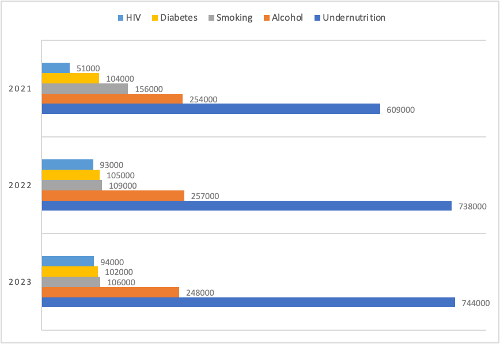
nutrients.(15,24) Recent national reports showed
that a majority of adults with TB experience a
substantial deficiency in energy intake, with this
issue particularly prevalent in female
individuals. The continuous upward trends and
disproportionately high prevalence indicate that
undernutrition may be the most persistent cause
among TB patients in India (Figure 3). This
situation frequently results in the co-occurrence
of undernutrition and TB, especially among people
who belong to economically disadvantaged or less
privileged segments of society.(15,20) Studies
consistently indicate that elevated prevalence of
undernutrition is prevalent among individuals in
lower wealth quintiles, those with limited
educational attainment, and populations living in
overcrowded, poorly ventilated environments
characterised by inadequate sanitation and
infrastructure.(28,29) These determinant factors
contribute to delayed diagnosis, poor nutritional
reserves at disease onset, and increased
vulnerability to twofold adverse outcomes.(4)
|
| Figure
3: Comorbidities associated with TB cases
in India (India TB report 2022-24)
|
The concurrent high
prevalence of TB and severe undernutrition,
together with the double burden phenomenon, has
significantly affected the tribal community in
India.(30,31) The observational studies conducted
across a few regions of India revealed that over
50.00% of TB cases among tribal populations are
attributed to undernourishment.(13) This data
includes findings from the Melghat tribes in
Maharashtra,(32) the Saharia tribes in Madhya
Pradesh,(33) and tribal communities in
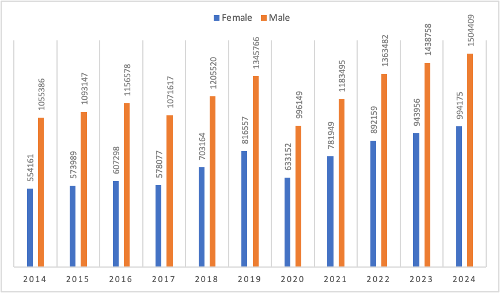
Manipur.(31) Additionally, gender dynamics play an
important role in TB epidemiology, with males
consistently accounting for a higher proportion of
TB incidence and relapses, particularly during the
period 2014–2024, likely reflecting differences in
occupational exposure, health-seeking behaviour,
and coexisting risk factors, such as the
consumption of psychoactive substances (Figure 4).
In 2014, there were around 1.05 million males
against 0.55 million females, which represents
close to two-thirds of the total TB burden. Over
the last couple of years, the total TB burden in
India has increased, with males accounting for
roughly 60.00-62.00% of this burden. The
percentage decreased from 66.00% in 2014 to
approximately 60.00-62.00% in subsequent years
(2024; 1.50 million males, 0.99 million females).
From 2014 to 2019, the total prevalence increased
almost steadily for both genders. Thereafter, a
sharp decline was observed in 2020 due to
COVID-19, followed by a strong rebound and steady
rise after that was noticed. Likewise for both men
and women, the total TB count was significantly
affected by the pandemic and lockdown due to
COVID-19 in the year 2020, followed by a recovery
post-2020 and growth (Figure 4). Even though many
patients' nutrition tends to get better during and
after TB treatment, a significant number still
face ongoing issues like low energy, muscle loss,
and less body adiposity, showing a clear
connection between TB and
undernutrition.(23,30,31,34)
|
| Figure
4: Gender-Based New and Relapsed Cases of
Tuberculosis in India |
Biological Mechanism of
Double Burden
Impact of Tuberculosis on Nutritional Status
and Metabolic Demands
Active TB profoundly
alters host metabolism and appetite, causing
nutrient malabsorption and creating hypermetabolic
conditions that contribute to progressive
nutritional status decline, weight loss, wasting
of lean muscle mass, and micronutrient deficiency.
Moreover, TB is characterized by an anabolic block
in protein metabolism, in which dietary proteins
are preferentially oxidized to meet elevated
energy demands rather than used for tissue repair
or immune function. The anabolic block is likely
to contribute to the wasting observed in TB by
limiting the ability to build or maintain lean
muscle mass despite nutrient intake.(34,35) These
metabolic alterations contribute to protein
deficiency, muscle wasting, delayed recovery, and
impaired immune responses, thereby worsening
disease progression and compromising treatment
outcomes in tuberculosis patients.(19,34,36) This
imbalance often continues even when patients
improve their dietary consumption, suggesting that
inflammation interferes with muscle building and
contributes to muscle reduction in tuberculosis
patients.(19) Chronic inflammation and persistent
immunological activity increase the basic energy
requirements, leading to a state of
hypermetabolism, followed by a loss of appetite
and problems with absorbing nutrients and
energy.(37–39) Pro-inflammatory cytokines,
including tumour necrosis factor-α and
interleukin-1, inhibit appetite and exacerbate
nutritional decline, intensifying energy deficits
and forcing the mobilisation of muscular and
adipose tissues to meet metabolic demands.
Simultaneously, active TB causes long-term
oxidative stress by producing excessive reactive
oxygen species during immune responses. This
damages cells and makes metabolism even less
efficient.(37,40) Evidence from Indian studies
demonstrates reduced antioxidant capacity and
increased lipid peroxidation among TB patients
compared with healthy controls, particularly among
those with pre-existing undernutrition.(37,39)
Recent metabolic analyses also indicate impaired
oxidative phosphorylation, enhanced glycolysis,
and downregulation of tricarboxylic acid cycle
intermediates, collectively reducing energy
efficiency and amplifying caloric deficits.(37,41)
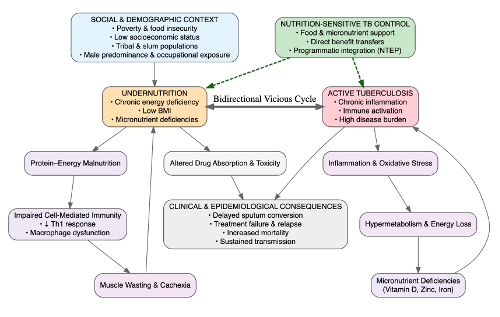
Figure 5 illustrates that the convergence of
chronic inflammation, oxidative stress, and energy
deprivation results in TB-associated cachexia, a
complex metabolic syndrome marked by rapid muscle
mass depletion, weight reduction, and significant
nutritional deterioration.(34,37) Moreover, TB
associated with cachexia significantly reduces the
quality of life and increases morbidity and
mortality, which emphasizes the importance of
integrated therapeutic strategies.
Protein–Energy Malnutrition and Impaired
Cell-Mediated Immunity
Protein-energy
malnutrition (PEM) can induce a nutritionally
acquired immunodeficiency that significantly
impairs cell-mediated immune responses crucial for
controlling M. tuberculosis infection
(Figure 5), thereby increasing the risk of
progression from latent infection to active
disease and leading to poorer clinical outcomes.
(15,21,38) The PEM is associated with thymic and
peripheral lymphoid atrophy, lymphopenia, and
reduced T-cell proliferation, resulting in a
diminished pool of functional T lymphocytes
critical for antimycobacterial defence.(21,38)
Functional impairment of T cells leads to reduced
Th1 cytokine production, including interferon-γ
and interleukin-2, along with a relative shift
toward increased Th2 cytokines, a shift away from
effective immune response pathways necessary for
clearing M. tuberculosis infections.(38,41,42)
Further, PEM disrupts phagocyte activation by
impairing signalling between interferon-γ and
tumour necrosis factor-α. This disturbance in
signalling compromises granuloma formation and
increases within the host the ability to multiply
M. tuberculosis.(38,42) Finally, the
impaired antigen presentation disrupts the
activity of phagocytosis and weakens the targeted
immune response, collectively increasing
susceptibility to active TB (38,42)
Micronutrient Deficiencies and
Tuberculosis Susceptibility
Micronutrient
deficiencies contribute to weakening the immune
function and increasing TB susceptibility by
impairing both innate and adaptive immune
responses essential for controlling M.
tuberculosis. Vitamin D deficiency, in
particular, is associated with impaired phagocyte
activation and reduced M. tuberculosis
killing, contributing to increased disease
susceptibility and severity,(43,44) which are
critical for effective immune defence against TB
infection. Zinc deficiency disrupts T-cell balance
and cytokine signalling, resulting in suboptimal
immune responses to TB antigens.(45) Further,
studies have also shown that zinc and selenium
deficiencies were significantly associated with a
higher risk of developing TB in HIV-infected
individuals,(46) highlighting the role of
micronutrients in maintaining immune competence in
vulnerable populations.(30,38) Abnormal iron
metabolism also plays a critical role, as
excessive iron accumulation within phagocytes
promotes oxidative stress and creates a favourable
intracellular environment for M. tuberculosis
persistence, while iron deficiency (anaemia)
remains highly prevalent among TB patients.(15,47)
Collectively, deficiencies in key micronutrients
impair immune responses, reduce antimicrobial
peptide synthesis, and weaken antioxidant
defences, thereby intensifying susceptibility to M.
tuberculosis infection and delaying
immunological recovery during and after
disease.(35,36,38) Further, the biological
mechanism reveals that undernutrition increases TB
susceptibility through impaired immune defences,
whereas active TB accelerates cachexia by
increasing metabolic demands, suppressing
appetite, and inducing oxidative stress.(22,34,37)
This bidirectional nature of TB and undernutrition
forms a double burden and influences the clinical
or treatment outcomes (Figure 5).
|
| Figure
5: Conceptual Framework and Bidirectional
Interaction of TB and Undernutrition in
India |
Clinical Consequences of
the Double Burden of Tuberculosis and
Undernutrition
The double burden of
TB and undernutrition creates a vicious cycle,
where undernutrition drives TB incidence and
severity, and TB increases the magnitude of
undernutrition and higher nutritional demand in
India. Further, poor nutritional status or severe
undernutrition among TB patients leads to more
serious and adverse clinical outcomes. These
patients with a poor nutritional intake had
significantly higher risks of mortality, treatment
failure, relapse, and drug resistance as compared
to those with an adequate intake.(15,23) Moreover,
the double burden of tuberculosis and
undernutrition has been associated with
substantially increased mortality, higher relapse
rates, and poorer treatment outcomes. Evidence
suggests that severe undernutrition at diagnosis
may double the risk of death among TB patients and
contribute to worse clinical outcomes.(15,16)
Studies have reported that the nutritional status
of TB patients was a prognostic indicator during
treatment.(15,23) Insufficient weight gain or
chronic energy deficiency (BMI<18.50 kg/m²)
along with severe undernutrition during the first
two months or initiation phase of anti-TB therapy
were strongly associated with subsequent prolonged
treatment, relapse, and mortality.(15,23,48)
Moreover, the prevalence of severe undernutrition
(BMI 16.0 to 17.0 kg/m²) at treatment initiation
and the absence of body-weight gain during therapy
have been significantly associated with an
increased risk of unfavourable treatment outcomes
and mortality.(23)The negative health effects
observed in undernourished TB patients show how a
lack of nutrition and problems with the immune
system work together to make things worse.
Inadequate intake of macronutrients and
micronutrients compromises mucosal barrier
integrity and cell-mediated immunity, increasing
susceptibility to infection and limiting immune
recovery.(15,38,47) Conversely, repeated or
prolonged TB infection further exacerbates
undernutrition by suppressing appetite, impairing
nutrient absorption, increasing metabolic demands,
and accelerating nutrient deterioration, thereby
sustaining a vicious biological cycle of disease
and nutritional decline.(15,34,44) Therefore,
these research findings showed that undernutrition
is not merely a coexisting condition but a central
driver of poor TB treatment outcomes. Furthermore,
year-wise spatial analysis of TB incidence showed
substantial regional variation across India
between 2018 and 2023, with a rise in TB cases
(Figure 6). In this six-year time span, the
northern region (e.g., Uttar Pradesh and Delhi)
and the eastern region (e.g., Bihar and West
Bengal) of India contributed the largest share of
cases, from 0.60 to 1.44 million and 0.26 to 1.28
million, respectively. A marked decline was also
observed in all regions during COVID-19 (2020),
followed by an increase in incidence by 2022,
particularly in the northern and eastern regions.
Most regions stabilised in diagnosing and
monitoring TB cases by 2023, indicating a recovery
in TB surveillance and reporting systems (Figure
6).

|
| Figure
6: State-wise overall tuberculosis burden
in India (2018-2023) (India TB Report
2019-2024) |
Effect of Nutritional
Supplementation in Tuberculosis
Nutritional
supplementation plays a crucial role in TB
management, particularly among patients with a
high undernutrition burden, as undernutrition
worsens the TB outcomes and increases mortality
risks.(49,50)Initial cohort studies in India
reported significant differences in sputum culture
conversion, with several re-evaluations indicating
that patients receiving nutritional
supplementation experienced faster sputum
conversion and higher rates of bacteriological
cure.(23,50) Later intervention indicated that the
nutritional supplementation among TB patients had
resulted in a significant gain in body weight,
mid-upper arm circumference, BMI, and muscle mass
alongside reductions in adverse clinical outcomes
and improved immune markers (e.g., haemoglobin and
lymphocyte counts) over extended follow-up periods
and successful treatment completion over
time.(49,50) Further, an early weight gain was
significantly associated with reduced TB-related
mortality and improvements in the quality of
life.(23,50) Moreover, supplementation with
high-energy diets and micronutrients, such as zinc
combined with vitamin A and vitamin D, has also
been shown to improve nutritional indices,
positive immunological outcomes, and recovery
trajectories and reduce mortality in TB
patients.(45,51) Evidence from intervention
studies suggests that providing staple cereals,
pulses, oils, and other calorie-dense foods to
tuberculosis patients is associated with improved
nutritional status, better treatment outcomes, and
enhanced recovery during therapy.(49,50) A large
study in India (i.e., RATIONS) reported that
providing food rations and micronutrients to
households contacting TB patients significantly
reduced the TB incidences (e.g., 39.00-48.00%),
thus highlighting the preventive potentials of
nutritional supplementation.(49) Additionally,
statistical modelling studies indicated that TB
prevalence can be diminished sustainably by
supplying rations of 750 kcal/day and
multivitamins to household contacts, which is
cost-effective for both the government and
society.(52) The nutritional interventions are
cost-effective in high TB burden settings like
India, and the necessary inclusion of nutritional
support in TB control programmes enhances
individual treatment outcomes and alleviates food
insecurity, enhances treatment completion, and
reduces transmission, thereby strengthening TB
elimination efforts in India.
Paediatric TB in the
Context of Undernutrition
The prevalence of
paediatric TB is often underestimated as a
significant part of the TB burden and is closely
associated with the burden of undernutrition,
being a major risk factor, which has become a
public health concern over the last decade in
India. Undernourished children exhibit impaired
immune functions that increase the susceptibility
to M. tuberculosis infection and
contribute to a more severe and progressive form
of disease, especially in rural and
socioeconomically vulnerable populations.(53,54)
This vulnerability is most pronounced among
children <5 years of age with severe acute
malnutrition and close contact with infectious or
drug-resistant TB cases, where TB progression is
often rapid and diagnosis is challenging.(54,55)
Despite this elevated risk over the last decade,
approximately 13.00% of the national TB burden,
only a small portion of paediatric TB cases, are
currently detected, and the rest remain
underdiagnosed in India.(9)TB incidence initially
declined 22.00% (2012-2013), then rose gradually
until 2016, spiking sharply from 2017 to a 2019
peak, reflecting an overall 38.00% rise, likely
due to improved detection and reporting. The
disruption in healthcare services caused by
COVID-19 has significantly impacted TB detection
in 2020. But there was a strong rebound after the
pandemic, with cases steadily rising from 2021 to
2023. The figure was a 40.00% increase since 2020
and the highest level ever recorded in the series
(Figure 7). Overall, the challenges with early
screening and diagnostic tools, the low accuracy
of traditional microbiological tests, and the
difficulties in getting samples from children,
especially in places with limited healthcare
resources, contribute to the rising prevalence of
cases and the ongoing connection between
paediatric TB and undernutrition in India.(53)
Thereby, the emerging evidence highlights that
better healthcare accessibility, nutrition
rehabilitation, and child healthcare centres may
serve as important points for diagnosing TB among
high-risk children, highlighting the close
epidemiological and clinical association between
undernutrition and paediatric TB burden in
India.(55,56)
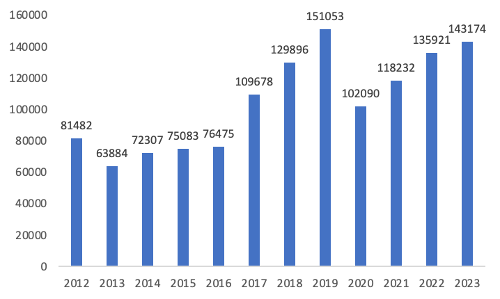
|
| Figure
7: Pediatric TB cases over the last
decade, according to the India TB report
(2013-24) |
Policy Landscape and
Programmatic Response in India
India has
increasingly recognised undernutrition as a
critical determinant of TB outcomes and
incorporated nutritional supports into its
national TB control and eradication framework.
According to the target of the SDGs to eradicate
the TB epidemic by the year 2030, the National
Strategic Plan of TB Elimination 2020-2025 of
India focuses on early diagnosis, patient-centered
care, nutritional support, and multisectoral
action. The TB-undernutrition nexus operates in
two directions, which highlights the importance of
nutrition-sensitive interventions and sustained
disparities in diagnosis threatening universal
health coverage. Integrated implementation should
therefore be used to address social determinants
and achieve TB elimination in India by 2030.
Nutritional interventions were associated with
improved treatment outcomes among TB patients,
including reduced mortality, enhanced weight gain
and body composition, faster sputum conversion,
and improved recovery during treatment.(15,50)In
this context, the Government of India introduced
the Nikshay Poshan Yojana (2018), providing direct
benefit transfers of ₹500 per month to all
notified TB patients and specifically ₹750 per
month for nutritional support during treatment for
a minimum duration of six months, with extended
support for those with DR-TB.(24,24) This monetary
benefit is primarily used by the TB patients to
purchase nutritious food items such as fruits and
milk, aligning with the nutritional support goals
of the scheme.(57)
This financial
assistance benefited more than 7.5 million TB
patients and has been associated with improved
dietary intake, reduced weight loss, better
treatment adherence, and enhanced recovery.(57,58)
However, implementation challenges persist,
including lack of awareness about the purpose of
the scheme and delays in benefit disbursement due
to bank account-related issues and Aadhaar-related
barriers; delays in payments that hinder optimal
utilization, and the limited adequacy of financial
support relative to household nutritional needs,
particularly among migrant workers,
socio-economically marginalised populations, or
patients who have been treated in the private
sector with HIV co-infection.(57–59) Recent
studies have highlighted a gradual improvement in
programme coverage and efficiency, as the average
time to receive benefits has halved in the past
five years.(25,57,58) Furthermore, the Pradhan
Mantri TB Mukt Bharat Abhiyan is a flagship
campaign launched by the Prime Minister of India,
aiming to eliminate TB by 2025, five years ahead
of the global SDG target. Key components of this
flagship programme include decentralised
initiatives like TB-Free Panchayats and cities
that leverage technologies such as the Nikshay
digital surveillance system, telemedicine, and
direct benefit transfers to support patients and
reduce stigma (Table 1). The campaign also
promotes active case finding, private sector
engagement, and nutritional support, alongside
investments in research for new diagnostics,
drugs, and vaccines, recognising the critical role
of novel tools in achieving TB elimination.
Beyond TB-specific
nutritional and financial supports the Government
of India has implemented a wide range of
nutrition-sensitive social protection programmes
that indirectly influence TB vulnerability and
recovery.(9) These include the Integrated Child
Development Services programme, which provides
supplementary nutrition and growth monitoring for
children under 6 years old and for pregnant or
lactating women; the PM POSHAN (i.e., Midday Meal)
scheme, which offers cooked food for students; the
Pradhan Mantri Matru Vandana Yojana, for maternal
and infant nutrition; and the Pradhan Mantri Garib
Kalyan Anna Yojana, expanded for guaranteed
subsidised grain distribution, especially during
COVID-19. National initiatives such as the
National Food Security Act (NFSA, 2013), food
fortification under the National Health Mission
(MoHFW, 2020), Poshan Abhiyaan 2.0 (2021), and the
“One Nation, One Ration Card” system contribute to
nutritional security and indirectly to the TB
elimination programme by combating the
determinants of the double burden of
undernutrition and TB at the population level.
Moreover, at the subnational level, efforts were
aligned with national policies to financially
support and provide supplementation to meet the
local needs of the patients, enhance the desired
support system, and improve treatment outcomes and
economic development.
|
Table 1: End TB strategy,
policies and initiatives to eliminate
tuberculosis from India (India TB
Report, 2024)
|
|
WHO End TB Pillar
|
Policy Benefits
|
Initiative
|
|
Integrated, patient-centred care
and prevention
|
Early Case Detection,
Timely Treatment Initiation
Routine Nutritional Assessment
|
National Tuberculosis Elimination
Programme
Tuberculosis Preventive Treatment
Nucleic Acid Amplification Tests
Ayushman Arogya Mandirs
|
|
Bold policies and supportive
systems
|
Nutritional and social protection during
TB care
|
Nikshay Poshan Yojana
Pradhan Mantri TB Mukt Bharat Abhiyaan
|
|
Intensified research and
innovation
|
Digital Monitoring
Accountability
Programme Analytics
|
Nikshay Digital Platform;
Performance-Based TB Index
Digital Surveillance and Monitoring Tools
|
Challenges Towards
Tuberculosis Control and Eradication
Despite ongoing
national efforts, TB control and elimination
continue to face persistent and interlinked
challenges in the biological, diagnostic,
programmatic, and social domains in India.(11,24)
Firstly, undernutrition contributes to more than
half of the TB incidence in India, increases the
vulnerability to infection, delays recovery, and
increases the likelihood of relapse and mortality,
thereby reinforcing a self-perpetuating cycle of
disease and deprivation.(15,16,21,60) This
situation requires the implementation of
intervention policies for TB that address
undernutrition. Secondly, a major challenge is the
diagnostic gap for TB in India. Although rapid
molecular diagnostics such as Xpert MTB/RIF and
expanded chest radiography have improved case
detection, their access is limited, especially
uneven in low- or limited-healthcare settings such
as rural and tribal areas.(11,24,30) Similarly,
there is a noticeable shortage of trained
healthcare workers and inadequate infrastructure
to execute diagnosis and initiate treatment
specifically for paediatric TB, ETB, and
DR-TB.(4,56)
These issues have a
direct negative impact on the achievement of the
SDG objective of eliminating India's TB epidemic
by 2030 (SDG 3.3) through ambitious targets such
as the reduction of incidence (i.e., 80.00%) and
related mortality (i.e., 90.00%) compared to 2015.
Despite progress, a decline in TB incidence and
death rate was found to be modest, with challenges
including DR-TB and a high burden of people living
with undernutrition and HIV.(12,61,62) The close
association between undernutrition and TB
identifies nutrition-sensitive disease control
interventions to decrease the susceptibility to
the disease, enhance treatment success rates, and
decrease relapse.(3,12,61) Inconsistent diagnostic
disparities, especially in rural and tribal areas,
are indicative of gaps in universal health
coverage and still hinder the TB diagnosis,
especially for paediatric TB,ETB, and DR-TB.(62)
Adopting integrated nutritional supports, fair
diagnostic coverage, strengthened health systems,
and multi-sectoral intervention to address the
social determinants of health will therefore be
necessary to meet the TB elimination target by
2030, in alignment with the SDG framework.
Moreover, failure to meet the SDG targets by 2030
is projected to cause overwhelming deaths and
millions in economic losses and also significantly
affect COVID-19-related disruption.(61,63)
Conclusion
The present
Systematic review provides strong evidence that
undernutrition functions both as a cause and
consequence of TB, contributing a significant
hindrance to improving the existing condition of
the TB burden in India. By integrating biological,
social, and programmatic evidence, this review
demonstrates how chronic energy deficiency or any
nutritional deprivation compromises immune
functions, adversely influences the treatment
response or outcomes, and increases the likelihood
of relapse in TB patients. Evidence also suggested
that nutritional interventions, such as food-based
supports and micronutrient supplementation, are
strongly associated with significant improvements
in treatment adherence, recovery trajectories, and
patient well-being, hence enhancing the overall
quality of life. However, gaps still exist in
providing timely nutritional supplements,
financial support, intervention programmes, and
longitudinal monitoring, including post-treatment
follow-ups. The recommendations are to include
regular nutrition checks and BMI tracking in the
National Tuberculosis Elimination Programme (NTEP)
and to provide food assistance beyond just cash
transfers, especially for groups in greatest need,
such as children under 5 years, tribal
communities, individuals residing in rural areas,
and those in the lower socio-economic group. Such
monitoring is necessary to prevent the
transmission of M. tuberculosis
infections and to strengthen elimination efforts
among high-risk populations in endemic regions.
Regular nutritional assessments, counselling, and
support for TB care are recommended to improve
overall treatment efficacy and patient survival.
Future research may investigate models of social
determinants that influence TB incidence in
diverse high-endemic regions. We recommend the
establishment of cost-effective diagnostic and
treatment centres, the role of public-private
partnerships in TB elimination programmes. The
necessary upgrading of the TB elimination policy
should be done not only to eradicate TB but also
to ensure public health resilience in India.
Funding
This research study received financial assistance
in the form of a University Grants Commission
Non-NET Fellowship from the Government of India.
Conflicts of interest
Authors declare that there are no conflicts of
interest.
Data availability
Data supporting the results of this study shall,
upon appropriate request, be available from the
corresponding author.
References
- Coleman M, Martinez L, Theron G, Wood R,
Marais B. Mycobacterium tuberculosis
Transmission in High-Incidence Settings—New
Paradigms and Insights. Pathogens. 2022
Oct 25;11(11):1228.
doi:10.3390/pathogens11111228
- World Health Organization. Global Programme on
Tuberculosis and Lung Health [WHO Report].
Geneva: World Health Organization; 2025. p. 74.
(Global Programme on Tuberculosis and Lung
Health).
- Deotale P, Mondal N. Tuberculosis epidemic in
India – a systematic review. Eur J Clin Exp
Med. 2023 Dec 30;21(4):853–62.
doi:10.15584/ejcem.2023.4.6
- Sinha S, Titiyal R, Mohapatra PR et al.
Evaluating the Gaps in the Diagnosis and
Treatment in Extra-Pulmonary Tuberculosis
Patients Under National Tuberculosis Elimination
Programme (NTEP) Guidelines: A Multicentric
Cohort Study. Trop Med Infect Dis. 2025
Jul 24;10(8):206.
doi:10.3390/tropicalmed10080206
- Central TB Division. India TB Report 2020
[Annual Report]. New Delhi, India: Ministry of
Health and Family Welfare, Government of India;
2020.
- Central TB Division. India TB Report 2021
[Annual Report]. New Delhi, India: Ministry of
Health and Family Welfare, Government of India;
2021.
- Central TB Division. India TB Report 2022
[Annual Report]. New Delhi, India: Ministry of
Health and Family Welfare, Government of India;
2022.
- Central TB Division. India TB Report 2023
[Annual Report]. New Delhi, India: Ministry of
Health and Family Welfare, Government of India;
2023.
- Central TB Division. India TB Report 2024
[Annual Report]. New Delhi, India: Ministry of
Health and Family Welfare, Government of India;
2024.
- Bardhan M, Hasan MM, Ray I et al. Tuberculosis
amidst COVID-19 pandemic in India: unspoken
challenges and the way forward. Trop Med
Health. 2021 Dec;49(1):84.
doi:10.1186/s41182-021-00377-1
- Padhi A, Agarwal A, Bhise M, Chaudhary A,
Joshi K, Katoch CDS. Progress and challenges in
achieving tuberculosis elimination in India by
2025: A systematic review and meta-analysis. PLOS
ONE. 2024 Mar 27;19(3):e0301060.
doi:10.1371/journal.pone.0301060
- Silva S, Arinaminpathy N, Atun R, Goosby E,
Reid M. Economic impact of tuberculosis
mortality in 120 countries and the cost of not
achieving the Sustainable Development Goals
tuberculosis targets: a full-income analysis. Lancet
Glob Health. 2021 Oct;9(10):e1372–9.
doi:10.1016/S2214-109X(21)00299-0
- Bhargava A, Bhargava M, Beneditti A, Kurpad A.
Attributable is preventable: Corrected and
revised estimates of population attributable
fraction of TB related to undernutrition in 30
high TB burden countries. J Clin Tuberc
Mycobact Dis. 2022 May;27:100309.
doi:10.1016/j.jctube.2022.100309
- Yang H, Ruan X, Li W, Xiong J, Zheng Y.
Global, regional, and national burden of
tuberculosis and attributable risk factors for
204 countries and territories, 1990–2021: a
systematic analysis for the Global Burden of
Diseases 2021 study. BMC Public Health. 2024
Nov 11;24(1):3111.
doi:10.1186/s12889-024-20664-w
- Padmapriyadarsini C, Shobana M, Lakshmi M,
Beena T, Swaminathan S. Undernutrition &
tuberculosis in India: Situation analysis &
the way forward. Indian J Med Res. 2016
Jul;144(1):11–20. doi:10.4103/0971-5916.193278
- Franco JV, Bongaerts B, Metzendorf MI et al.
Undernutrition as a risk factor for tuberculosis
disease. Cochrane Central Editorial Service,
editor. Cochrane Database Syst Rev. 2024
Jun 11;2025(3).
doi:10.1002/14651858.CD015890.pub2
- International Institute for Population
Sciences (IIPS); ICF. National Family Health
Survey (NFHS-5), 2019–21: India. Mumbai: IIPS
and ICF; 2021.
- Victora CG, Christian P, Vidaletti LP,
Gatica-Domínguez G, Menon P, Black RE.
Revisiting maternal and child undernutrition in
low-income and middle-income countries: variable
progress towards an unfinished agenda. The
Lancet. 2021 Apr;397(10282):1388–99.
doi:10.1016/S0140-6736(21)00394-9
- Ockenga J, Fuhse K, Chatterjee S, et al.
Tuberculosis and malnutrition: The European
perspective. Clinical Nutrition (Edinburgh,
Scotland). 2023; 42(4), 486–492.
https://doi.org/10.1016/j.clnu.2023.01.016
- Carwile ME, Hochberg NS, Sinha P.
Undernutrition is feeding the tuberculosis
pandemic: A perspective. J Clin Tuberc
Mycobact Dis. 2022 May;27:100311.
doi:10.1016/j.jctube.2022.100311
- Dauphinais MR, Koura KG, Narasimhan PB et al.
Nutritionally acquired immunodeficiency must be
addressed with the same urgency as HIV to end
tuberculosis. BMC Glob Public Health. 2024
Jan 12;2(1):4. doi:10.1186/s44263-023-00035-0
- Sinha P, Davis J, Saag L et al. Undernutrition
and Tuberculosis: Public Health Implications. J
Infect Dis. 2019 Apr 16;219(9):1356–63.
doi:10.1093/infdis/jiy675
- Sinha P, Ponnuraja C, Gupte N et al. Impact of
Undernutrition on Tuberculosis Treatment
Outcomes in India: A Multicenter, Prospective,
Cohort Analysis. Clin Infect Dis. 2023
Apr 17;76(8):1483–91. doi:10.1093/cid/ciac915
- Singh UB, Rade K, Rao R et al. Lessons and
updates from India’s National Tuberculosis
Elimination Program – bold decisions and
innovative ways of fast-tracking progress toward
ending tuberculosis. IJID Reg. 2025
Mar;14:100599. doi:10.1016/j.ijregi.2025.100599
- Jyani G, Prinja S, Nadipally S et al. Economic
evaluation of integrating nutritional support
intervention in India’s National Tuberculosis
Elimination Programme: implications for
low-income and middle-income countries. BMJ
Open. 2025 Sep;15(9):e098851.
doi:10.1136/bmjopen-2025-098851
- Swaminathan S. Elimination of tuberculosis in
India: Accelerating to the Sustainable
Development Goals targets. Natl Med J India.
2025 Feb 7;37:237–40.
doi:10.25259/NMJI_1496_2024
- Balinda IG, Sugrue DD, Ivers LC. More Than
Malnutrition: A Review of the Relationship
Between Food Insecurity and Tuberculosis. Open
Forum Infect Dis. 2019 Apr 1;6(4).
doi:10.1093/ofid/ofz102
- Marimuthu P. Tuberculosis prevalence and
socio-economic differentials in the slums of
four metropolitan cities of India. Indian J
Tuberc. 2016 Jul;63(3):167–70.
doi:10.1016/j.ijtb.2016.08.007
- Pramanick T. Tuberculosis (TB) Prevalence in
Darjeeling District, West Bengal, India:
Exploring the Socio-Economic Status of TB
Patients. Afr J Biomed Res. 2024 Nov
30;3911–22. doi:10.53555/AJBR.v27i4S.3813
- Debnath A, Singh N, Gupta S, Kishore J. Burden
of Tuberculosis among tribal populations of
India: A systematic review and meta-analysis. Lung
India. 2024 Mar;41(2):121–9.
doi:10.4103/lungindia.lungindia_412_23
- Kannayan SC, Watson B, Thiruvengadam K et al.
Malnutrition in tribal people living with
tuberculosis in India: A systematic review &
meta-analysis. Indian J Med Res. 2024
Sep 30;160:23–30. doi:10.25259/IJMR_2188_23
- Bapat PR, Satav AR, Husain AA et al.
Differential Levels of Alpha-2-Macroglobulin,
Haptoglobin and Sero-Transferrin as Adjunct
Markers for TB Diagnosis and Disease Progression
in the Malnourished Tribal Population of
Melghat, India. PLOS ONE. 2015 Aug
4;10(8):e0133928.
doi:10.1371/journal.pone.0133928
- Rao VG, Bhat J, Yadav R, Sharma RK, Muniyandi
M. A comparative study of the socio-economic
risk factors for pulmonary tuberculosis in the
Saharia tribe of Madhya Pradesh, India. Trans
R Soc Trop Med Hyg. 2018 Jun
1;112(6):272–8. doi:10.1093/trstmh/try052
- Koethe JR, Von Reyn CF. Protein-calorie
malnutrition, macronutrient supplements, and
tuberculosis. Int J Tuberc Lung Dis. 2016
Jul 1;20(7):857–63. doi:10.5588/ijtld.15.0936
- Mistry D, Patil P, Beniwal SS et al. Cachexia
in tuberculosis in South-East Asian and African
regions: knowledge gaps and untapped
opportunities. Annals of Medicine and
Surgery. 2024; 86(10), 5922–5929.
https://doi.org/10.1097/MS9.0000000000002446
- Lu C, Xu Y, Li X et al. Nutritional status
affects immune function and exacerbates the
severity of pulmonary tuberculosis. Front
Immunol. 2024 Jul 17;15:1407813.
doi:10.3389/fimmu.2024.1407813
- Amaral EP, Vinhaes CL, Oliveira-de-Souza D,
Nogueira B, Akrami KM, Andrade BB. The Interplay
Between Systemic Inflammation, Oxidative Stress,
and Tissue Remodeling in Tuberculosis. Antioxid
Redox Signal. 2021 Feb 20;34(6):471–85.
doi:10.1089/ars.2020.8124
- Chandrasekaran P, Saravanan N, Bethunaickan R,
Tripathy S. Malnutrition: Modulator of Immune
Responses in Tuberculosis. Front Immunol.
2017 Oct 18;8:1316. doi:10.3389/fimmu.2017.01316
- Fâcă AI, Udeanu DI, Arsene AL, Mahler B,
Drăgănescu D, Apetroaei MM. Nutritional
Deficiencies and Management in Tuberculosis:
Pharmacotherapeutic and Clinical Implications. Nutrients.
2025 May 30;17(11):1878. doi:10.3390/nu17111878
- Tiwari D, Martineau AR. Inflammation-mediated
tissue damage in pulmonary tuberculosis and
host-directed therapeutic strategies. Semin
Immunol. 2023 Jan;65:101672.
doi:10.1016/j.smim.2022.101672
- Kim JS, Kim YR, Yang CS. Host-Directed Therapy
in Tuberculosis: Targeting Host Metabolism. Front
Immunol. 2020 Aug 13;11:1790.
doi:10.3389/fimmu.2020.01790
- Rahman F. Characterizing the immune response
to Mycobacterium tuberculosis: a comprehensive
narrative review and implications in disease
relapse. Front Immunol. 2024 Nov
22;15:1437901. doi:10.3389/fimmu.2024.1437901
- Balcells ME, Yokobori N, Hong B young, Corbett
J, Cervantes J. The lung microbiome, vitamin D,
and the tuberculous granuloma: A balance
triangle. Microb Pathog. 2019
Jun;131:158–63.
doi:10.1016/j.micpath.2019.03.041
- Santos-Mena A, González-Muñiz OE,
Jacobo-Delgado YM, Rivas-Santiago B. Shedding
light on vitamin D in tuberculosis: A
comprehensive review of clinical trials and
discrepancies. Pulm Pharmacol Ther. 2024
Jun;85:102300. doi:10.1016/j.pupt.2024.102300
- Wagnew F, Alene KA, Eshetie S, Wingfield T,
Kelly M, Gray D. Effects of zinc and vitamin A
supplementation on prognostic markers and
treatment outcomes of adults with pulmonary
tuberculosis: a systematic review and
meta-analysis. BMJ Glob Health. 2022
Sep;7(9):e008625. doi:10.1136/bmjgh-2022-008625
- Banyal D, Sharma S, Ram AK et al. Association
of Micronutrients with Tuberculosis Development
in HIV Infected Patients. Indian J Clin
Biochem. 2023 Jul;38(3):393–9.
doi:10.1007/s12291-022-01026-y
- Chhabra S, Kashyap A, Bhagat M, Mahajan R,
Sethi S. Anemia and Nutritional Status in
Tuberculosis Patients. Int J Appl Basic Med
Res. 2021 Oct;11(4):226–30.
doi:10.4103/ijabmr.ijabmr_76_21
- Deffase RA, Miller ER, Fuge TG, Gizachew A.
Under-nutrition among adult tuberculosis
patients completing intensive-phase treatment at
public health facilities in Kembata Zone,
Central Ethiopia Region. BMC Infect Dis. 2025
Oct 14;25(1):1305.
doi:10.1186/s12879-025-11803-8
- Bhargava A, Bhargava M, Meher A et al.
Nutritional supplementation to prevent
tuberculosis incidence in household contacts of
patients with pulmonary tuberculosis in India
(RATIONS): a field-based, open-label,
cluster-randomised, controlled trial. The
Lancet. 2023 Aug;402(10402):627–40.
doi:10.1016/S0140-6736(23)01231-X
- Mahapatra A, Thiruvengadam K, Nair D et al.
Effectiveness of food supplement on treatment
outcomes and quality of life in pulmonary
tuberculosis: Phased implementation approach.
PLOS ONE. 2024 Jul 16;19(7):e0305855.
doi:10.1371/journal.pone.0305855
- Eletreby R, Elsharkawy A, Mohamed R, Hamed M,
Kamal Ibrahim E, Fouad R. Prevalence of vitamin
D deficiency and the effect of vitamin D3
supplementation on response to anti-tuberculosis
therapy in patients with extrapulmonary
tuberculosis. BMC Infect Dis. 2024 Jul
9;24(1):681. doi:10.1186/s12879-024-09367-0
- Sinha AK, Debata I, Pradhan PC, Panda PS,
Behera BK, Mukhopadhyay A. A study to assess the
nutritional status and dietary gap among
pulmonary tuberculosis patients in Raipur city.
J Fam Med Prim Care. 2024
May;13(5):2138–42.
doi:10.4103/jfmpc.jfmpc_1948_23
- Chabala C, Roucher C, Ton Nu Nguyet MH et al.
Development of tuberculosis treatment decision
algorithms in children below 5 years
hospitalised with severe acute malnutrition in
Zambia and Uganda: a prospective diagnostic
cohort study. eClinical Medicine. 2024
Jul;73:102688. doi:10.1016/j.eclinm.2024.102688
- d’Elbée M, Mafirakureva N, Chabala C et al.
Treatment decision algorithms for tuberculosis
screening and diagnosis in children below 5
years hospitalised with severe acute
malnutrition: a cost-effectiveness analysis. eClinical
Medicine. 2025 May;83:103206.
doi:10.1016/j.eclinm.2025.103206
- Moore BK, Graham SM, Nandakumar S, Doyle J,
Maloney SA. Pediatric Tuberculosis: A Review of
Evidence-Based Best Practices for Clinicians and
Health Care Providers. Pathogens. 2024
Jun 1;13(6):467. doi:10.3390/pathogens13060467
- Thomas SV, Rajendran P, Shanmugam S. Young
lungs cared enough? India’s frontiers in
diagnosing pediatric TB. Front Pediatr. 2025
Aug 11;13:1638167. doi:10.3389/fped.2025.1638167
- Jeyashree K, Thangaraj JWV, Shanmugasundaram D
et al. Ni-kshay Poshan Yojana : receipt and
utilization among persons with TB notified under
the National TB Elimination Program in India,
2022. Glob Health Action. 2024 Dec
31;17(1):2363300.
doi:10.1080/16549716.2024.2363300
- Verma P, Jadhav SL, Dhone A et al. Coverage,
delays and implementation challenges of ‘Direct
Benefit Transfer’ in the National Tuberculosis
Elimination Programme – A mixed methods study. Indian
J Tuberc. 2024 Jul;71(3):284–90.
doi:10.1016/j.ijtb.2023.05.014
- Chadhar K, Madhappan N, Chandra A et al.
Coverage and utilization of Nikshay Poshan
Yojana among patients with tuberculosis:
Exploring patterns and influencing factors. Indian
J Tuberc. 2025 Jan;72(1):38–45.
doi:10.1016/j.ijtb.2023.09.005
- Sinha P, Lönnroth K, Bhargava A, et al. Food
for thought: addressing undernutrition to end
tuberculosis. Lancet Infect Dis.
2021;21(10):e318-e325.
doi:10.1016/S1473-3099(20)30792-1
- Carter DJ, Glaziou P, Lönnroth K et al. The
impact of social protection and poverty
elimination on global tuberculosis incidence: a
statistical modelling analysis of Sustainable
Development Goal 1. Lancet Glob Health. 2018
May;6(5):e514–22.
doi:10.1016/S2214-109X(18)30195-5
- Deotale P, Mondal N. Drug Resistance
Tuberculosis Epidemic in India: A Review. Online
J Health Allied Scs. 2023;22(2):8.
Available at https://www.ojhas.org/issue86/2023-2-8.html
- Silva S, Arinaminpathy N, Atun R, Goosby E,
Reid M. Economic impact of tuberculosis
mortality in 120 countries and the cost of not
achieving the Sustainable Development Goals
tuberculosis targets: a full-income analysis. Lancet
Glob Health. 2021 Oct;9(10):e1372–9.
doi:10.1016/S2214-109X(21)00299-0
|


